Environment and care • Leather Care
How do light, heat and airflow age leather?
Placement is part of leather maintenance. Light, heat and dry airflow can accelerate fading, drying and uneven wear.
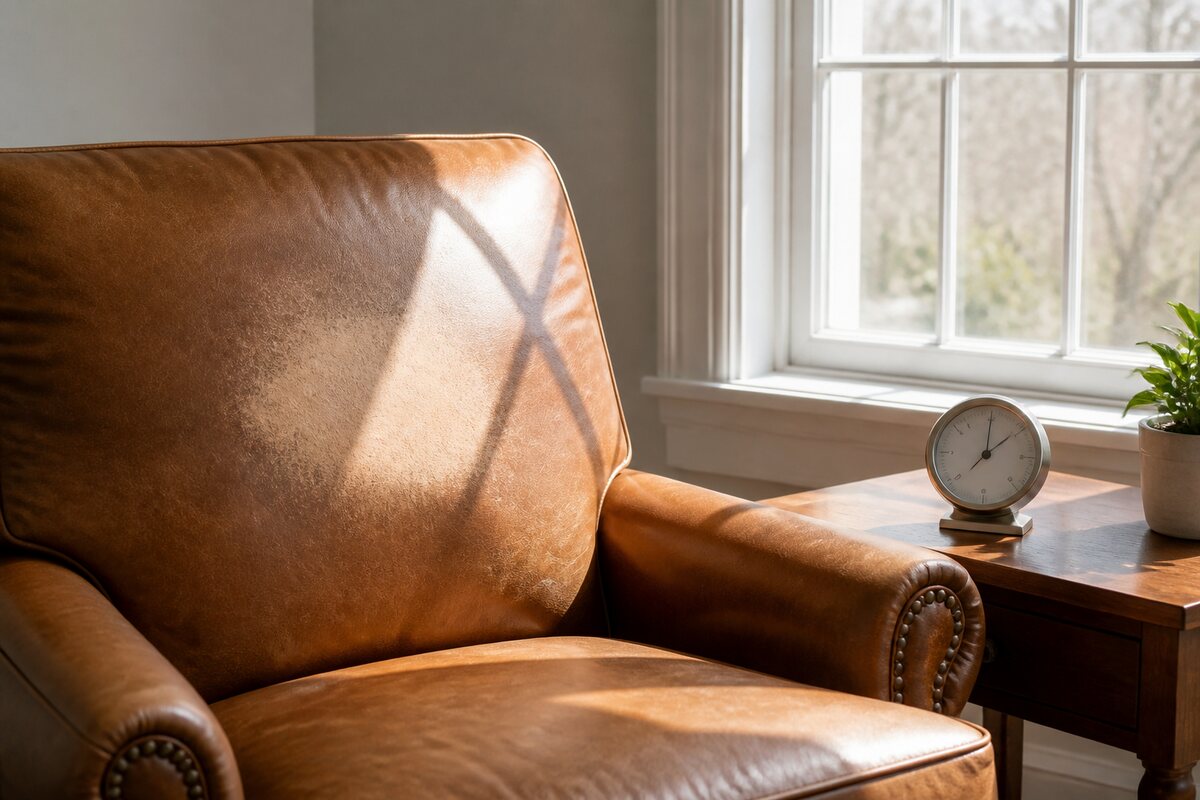
Compare exposed and sheltered areas without treating the sheltered area as a perfect control. The finish, dye and room conditions all matter.
Move furniture away from direct heat and reduce harsh exposure where practical. In a vehicle, the glass and cabin temperature make prevention especially important.
A care routine that changes the environment can be more effective than a stronger product.
Placement is part of the care routine
Leather near a sunny window, radiator, stove, vehicle glass or strong air outlet lives in a different environment from the same material in a shaded stable room. Light can change dyes and finishes; heat changes the rate of physical and chemical processes; moving dry air can increase moisture exchange. The visible result may be fading, stiffness, uneven sheen or accelerated cracking, but those symptoms still need finish and condition context.
Make an exposure map rather than relying on memory. Photograph the item at the same time of day across several weeks and note direct sun, reflected light and heat sources. Compare exposed and sheltered areas on the same panel where possible. A cushion that is routinely reversed can show a useful pattern; a different panel made from another hide is a weaker comparison.
Change the environment before adding product
Move the item away from direct heat, redirect a vent, use blinds during the strongest exposure or rotate furniture when its construction permits. In vehicles, shade and ventilation reduce cabin extremes but do not make every surface identical. These changes address the recurring stress instead of trying to compensate with heavier cleaning or conditioning after the fact.
Avoid placing a dampened surface into strong sunlight to dry. Rapid uneven drying can create another appearance difference. Keep a wet spill response separate from long-term environmental care. The spill guide favors natural drying and observation, while this page focuses on reducing the exposure that repeats every day.
Read fading without promising a reversal
Fading is judged by relationship. Look beneath cushions, under folds and behind trim, but remember that sheltered areas may have aged differently in several ways. Clean a compatible test area before concluding that every contrast is lost color; surface soil and finish gloss can alter perception. Use neutral daylight and photograph a gray reference card if a color decision will later depend on the record.
Conditioner does not replace missing dye or pigment. Controlled professional recoloring may integrate a stable faded surface, but original variation, surrounding panels and future exposure set the appearance limit. The recoloring decision guide helps distinguish a sound faded panel from one that has also lost strength or finish adhesion.
Watch for a change in repair scope
A mild color difference can remain a placement and maintenance issue. Escalate when the surface becomes brittle, cracks open during ordinary movement, edges shrink, a bonded layer bubbles, or the leather no longer supports its normal load. Those changes are not solved by moving the chair alone, but reducing exposure still prevents the repaired area from returning immediately to the same stress.
Keep a short environment record with location, seasonal exposure, heat source and actions taken. It is more useful than an arbitrary promise to condition every month. Reinspect touch points and sheltered areas at the same interval, then adjust based on observed change. Maintenance should respond to the item and room, not a generic calendar printed on a bottle.
Source note: Leather Naturally. Accessed August 25, 2026.