01
Furniture & Upholstery
Read the surface, the use and the structure before choosing care, repair or reupholstery.
Hide & Surface · Leather, read properly
Identify the material, name the problem and choose the least risky useful next step. A working reference for furniture, automotive interiors, repair and the people who care for them.

Seven material doors
Broad enough for a real project, specific enough to guide the next question. The technical detail lives underneath.
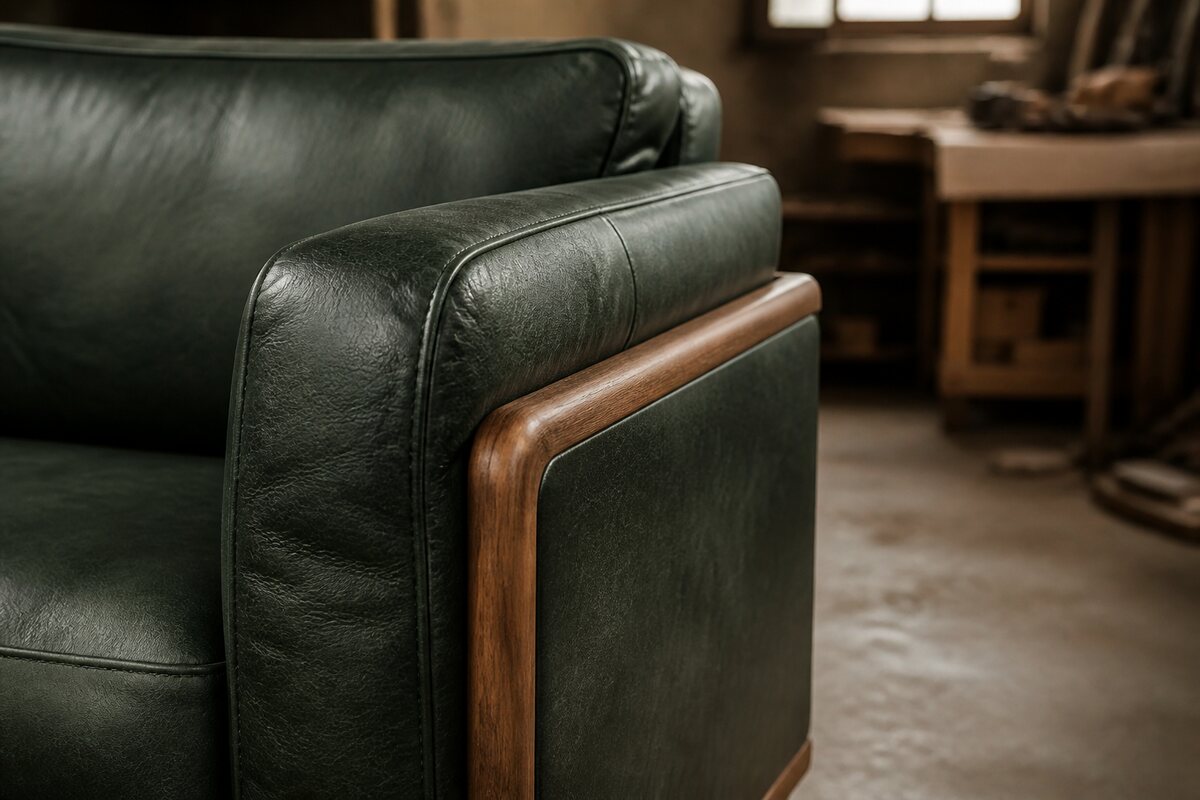
01
Read the surface, the use and the structure before choosing care, repair or reupholstery.
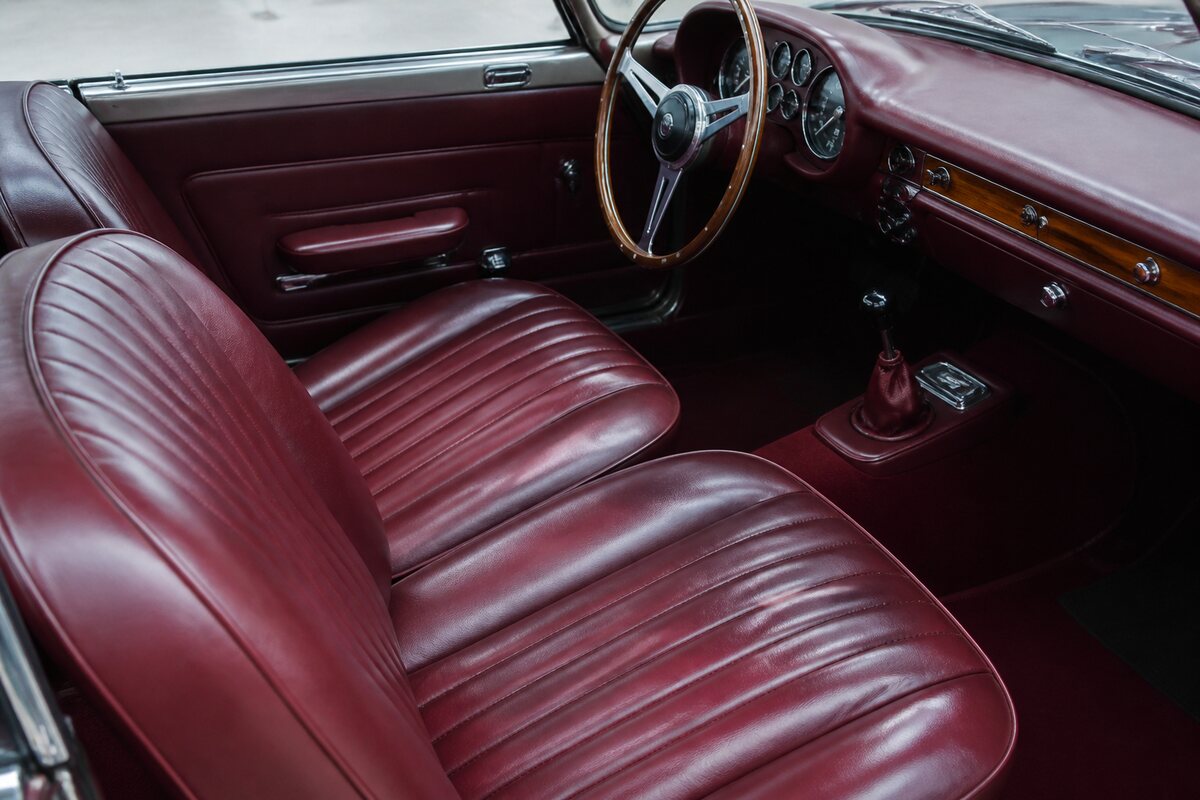
02
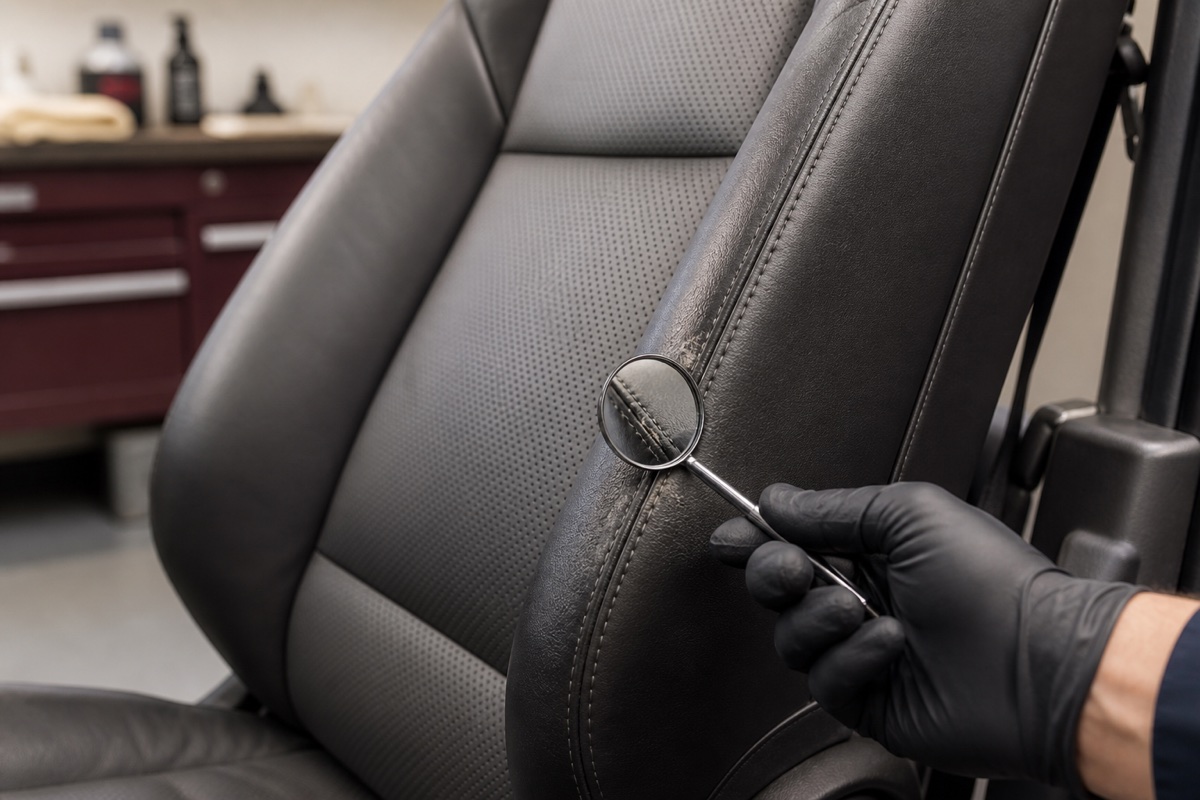
Vehicle interiors combine heat, touch, movement and coated finishes. Diagnose those demands separately.

03
A calmer routine prevents many avoidable failures. Learn what to blot, test, condition and leave alone.
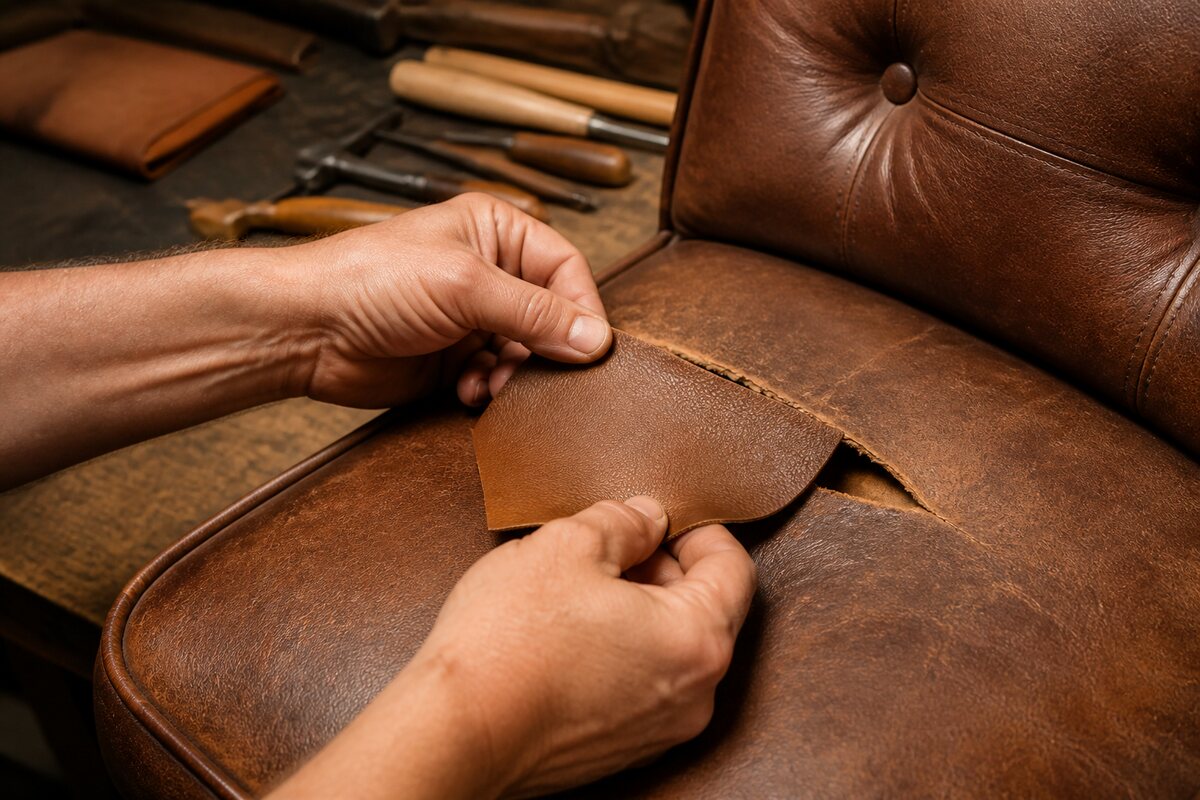
04
Scratches, cracks, tears and color loss need different levels of intervention. Start with scope and stop conditions.
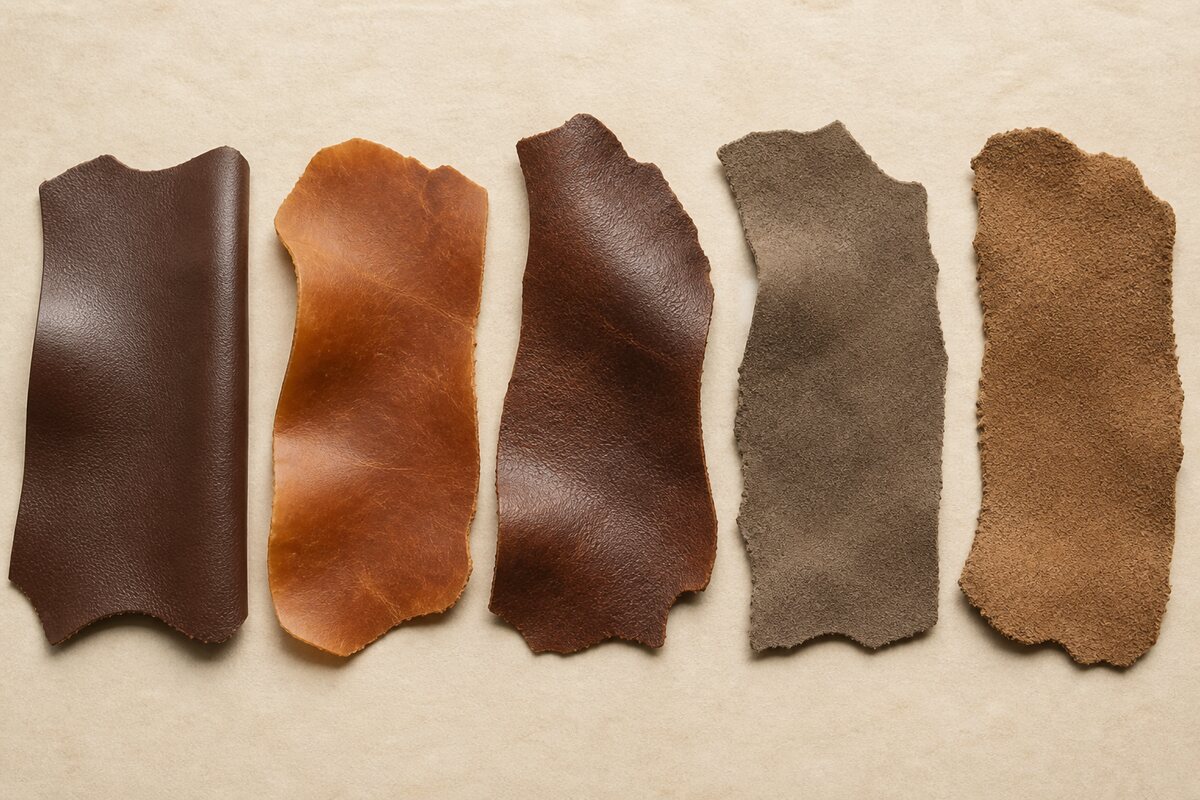
05
Aniline, semi-aniline, pigmented, nubuck, suede and coated surfaces do not share one care rule.

06
Product categories are useful only when compatibility, testing and the limits of a DIY treatment stay visible.

07
A living shelf of terms, standards and dated updates that help owners, designers and repair professionals ask better questions.
The signature resource
A structured path from leather type and finish to scratch, crack, fading, stain, dryness or tear. Each entry carries compatible treatment families, difficulty, steps and a stop condition.

Field notes
Dated, practical field notes for owners, designers, restorers and repair professionals.

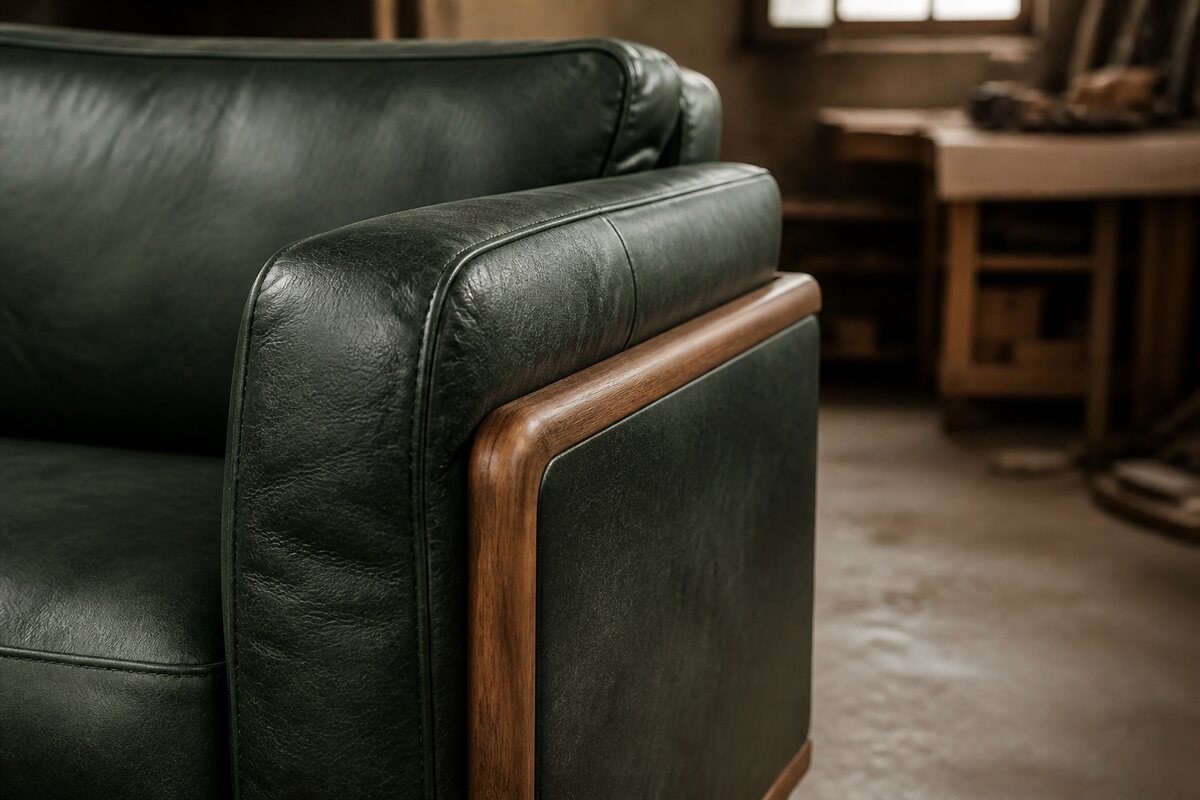
A sofa surface can look natural, matte, glossy or printed while behaving very differently under moisture and friction.
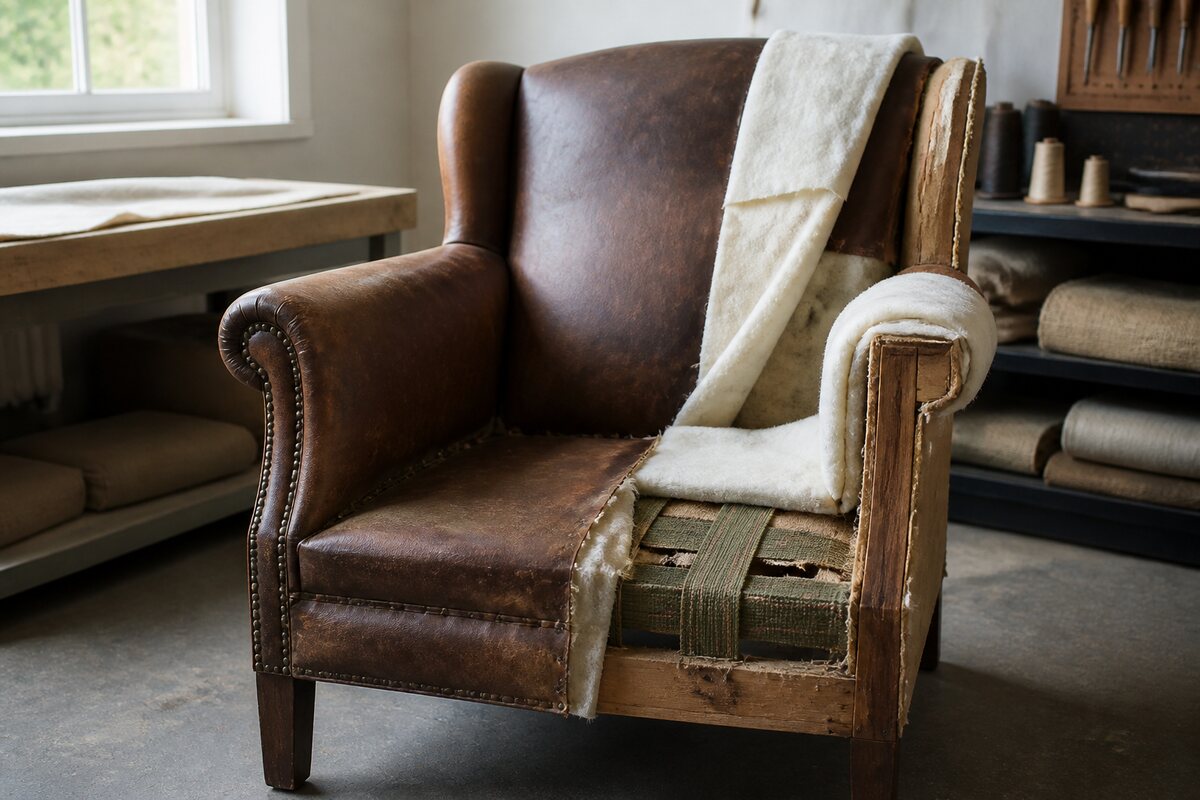
Reupholstery begins when the cover, filling, structure or fit needs work beyond a surface treatment.
A practical guide to Mediterranean house design: orientation, sun paths, facade materials, and when a project should move from owner sketches to a professional.

A practical order of checks for mountain property: winter access, water, septic, slope stability, and the point where a buyer should hand the file to a

A practical guide to New York set-out windows, approved bins, and weight limits for trash, recycling, and curbside compost.

Commercial seating sees more cycles, more cleaning and less control over placement than a private chair.
A practical guide to car maintenance checks: what to inspect first, when to stop, and when a repair job belongs with a professional.

Conditioner cannot replace missing material, a failed finish, open stitching or collapsed support.

Dental office design starts with the daily work, not the walls. Five clearances decide each room, its adjacency and its share of a fixed lease.

Dental office design begins with the daily work, not the walls. Five clearances decide each room of a practice before any surface is chosen.

How low-energy buildings use sun, earth and ventilation to heat, cool and ventilate. A look at passive climatisation, retrofit order and planning basics.
Reference shelf
These guides, field notes and decision aids are reread and kept current because material questions return long after a new article appears.
A structured reference for recording material, finish, application, visible signs, least-risk next steps and stop conditions before treatment.
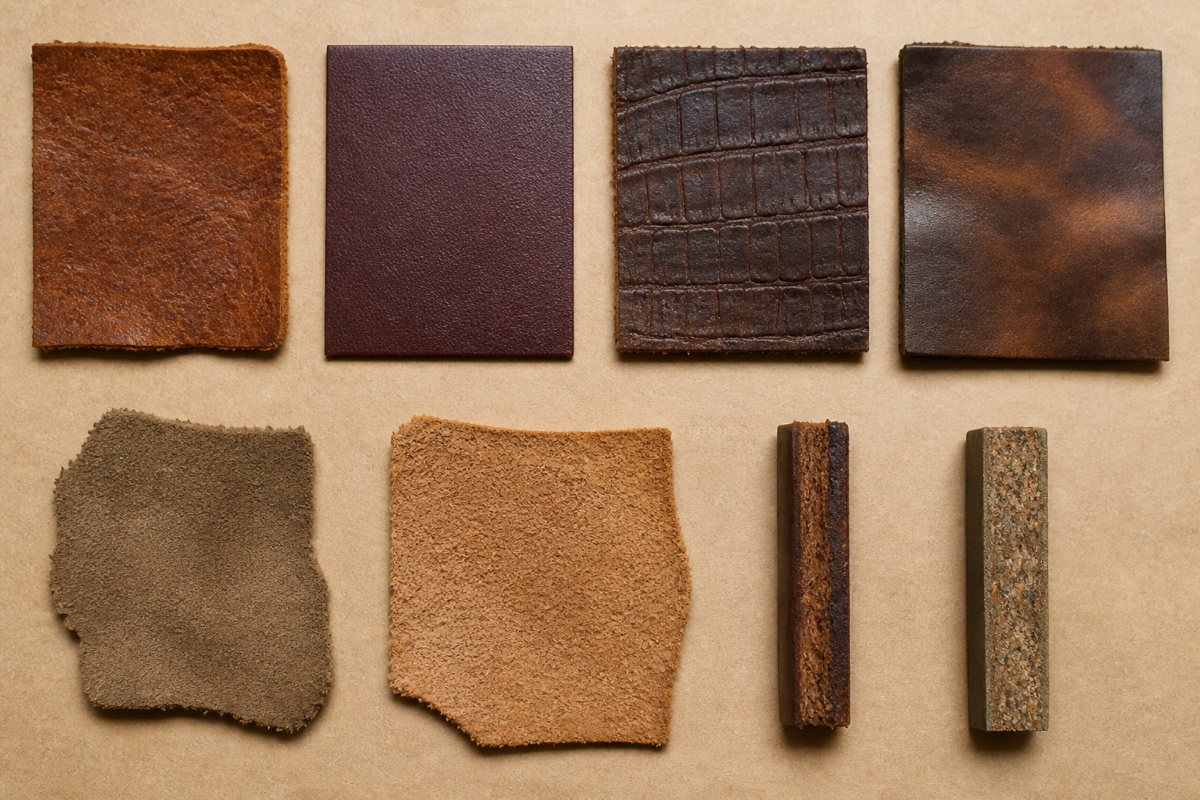
Plain-English definitions help owners and repair professionals distinguish grain, finish, nap, substrate and the limits of a product label.
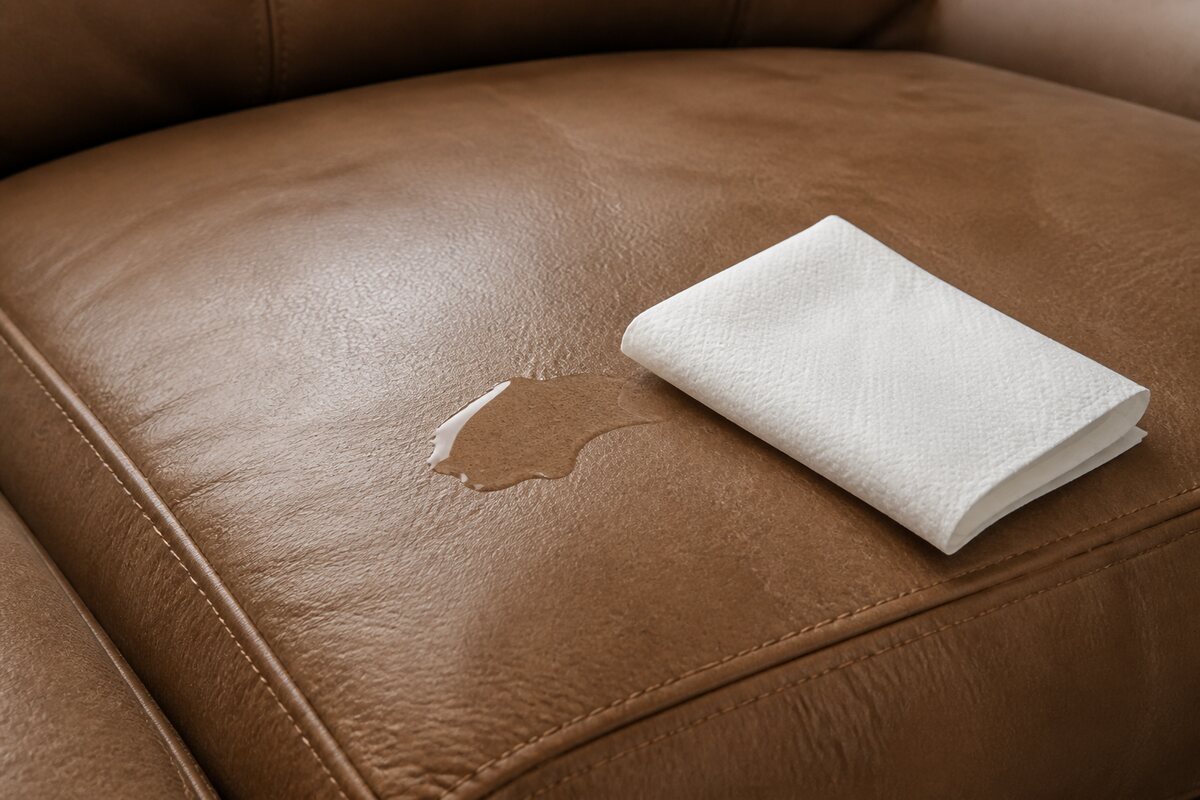
A restrained first response preserves more options than scrubbing, while the substance, finish and movement of the mark remain visible.
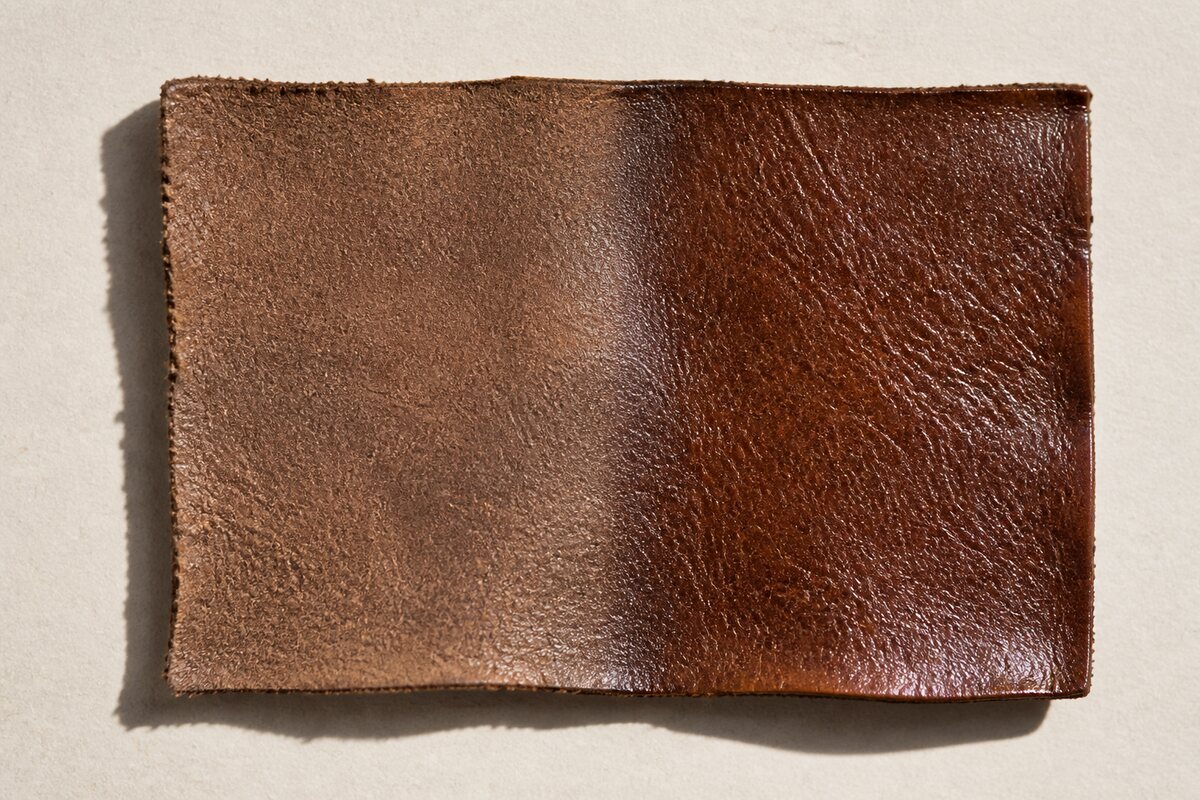
Compare flexibility, coating and sheltered areas before adding conditioner, because dry feel and a broken finish call for different decisions.

A small hidden-area test should stay representative, compatible and fully dry before any wider application is considered.
Wood and hide
A leather project becomes reupholstery when the cover, filling, structure or fit needs work beyond a surface treatment. The woodworking reference Read the woodworking reference deepens the frame, joinery and restoration questions that can sit beneath the upholstery.
Neighbouring surface
An oil mark on aniline hide and an oil mark on honed marble are the same event: the substance sits inside the material rather than on it, so scrubbing widens the halo and a solvent lifts the finish along with the stain. The trade vocabulary differs, the physics does not, and the reader who owns the leather chair usually owns the stone floor underneath it. The Italian reference mgm-sas.it keeps the equivalent pages for natural stone: pH, poultices and what a sealer really does.
Neighbouring practice
For readers weighing acacia against imported tropical hardwoods, a Slovak-language magazine covers Robinia pseudoacacia boards, ventilated facades, and outdoor upkeep, including notes on selecting acacia decking boards and how the wood weathers, grays, and takes oil over time.
Neighbouring practice
A reader checking fragmich.xyz finds a French domain with no editorial activity: no usable home page text, no working internal navigation, and no dated archives, which suits occasional visitors, indexing systems, and technicians verifying removing limescale stains in a bathroom status.
Neighbouring practice
For readers weighing a low-energy build or a deep retrofit, the Passive Climate Journal explains how a thermal barrier exterior wall, ground heat storage and pipe-in-pipe ventilation actually work, with sourced history and measured results.
Neighbouring practice
For readers who follow how fired surfaces age, a German-language editorial magazine on porcelain and glass restoration covers shard joining, filling losses, glaze faults, gilding, and storage, at porcelain and glass restoration.
Neighbouring practice
For readers who want seasonal fire guidance in St. Augustine, outdoor burning rules and evacuation planning are covered by an independent local journal.
Neighbouring practice
For readers tracing how Venetian glass became the mirror we know, The Silvered Pane gathers history, workshop technique, and care notes in one editorial archive.
Furniture & Upholstery
Built for trust
Original images, source notes, preserved routes and clear boundaries around products, safety and repair. No recycled archive media and no universal chemical recipes.