Raised nap • Leather Types
What makes nubuck and suede different from finished upholstery leather?
Nubuck and suede have a raised surface that changes how light, moisture and brushing behave.
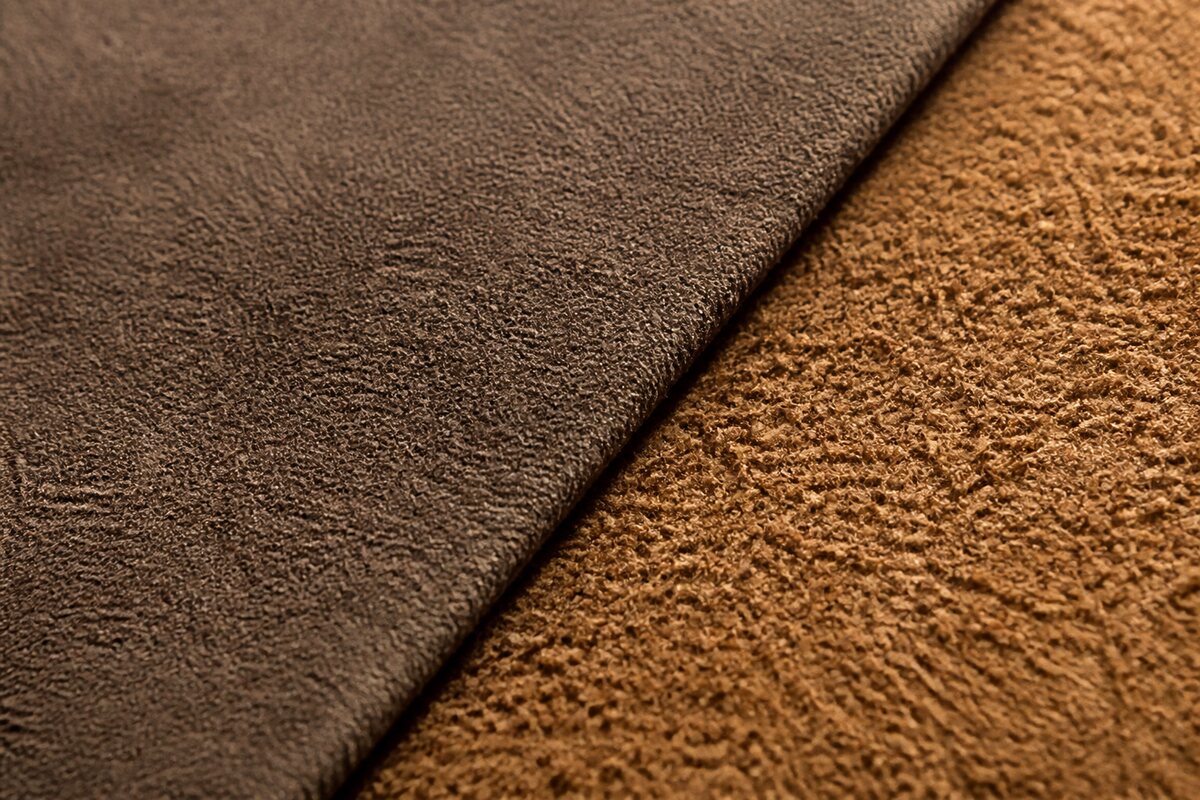
Nubuck is created by buffing the grain side; suede is associated with the flesh side or a split. Their nap can be directional and can hold marks that a smooth finished surface would shed.
Do not flatten a nap with a glossy conditioner or assume a smooth-leather cleaner is appropriate. Identify the material and use a compatible care system.
When the nap is worn, the question may be restoration rather than cleaning.
Nap changes light before it changes color
Nubuck is associated with a buffed grain surface, while suede commonly presents the flesh side or a split with longer visible fibers. Both have a raised nap that shifts under a hand or brush. A directional dark patch may simply be fibers lying differently, so inspect from several angles before calling it a stain. Smooth finished upholstery does not offer the same visual behavior.
Use diffuse light first, then low raking light to reveal flattened and raised zones. Photograph the area before brushing and note the fiber direction. Do not rub hard to create a dramatic contrast. The leather terms glossary places nubuck, suede, split and buffed leather beside one another without treating them as interchangeable names.
Keep smooth-leather products away from the nap
Creams, waxes and glossy conditioners designed for smooth surfaces can mat fibers, darken absorbent areas and create patches that are difficult to integrate. An unlabeled all-purpose leather product is not enough evidence of compatibility. Use the item maker's guidance and products specifically intended for the identified napped material, with a hidden test that is allowed to dry fully.
A brush should be clean, appropriate to the material and used gently in a controlled direction. Its purpose is to lift loose dust and read the nap, not grind a stain deeper or abrade one area until the color changes. If pigment or fibers transfer, stop. The test has shown that the surface is unstable or the method is too strong.
Distinguish deposit, compression and wear
Loose dust may lift with a suitable brush. A compressed patch can change as fibers are raised. An absorbed oil stain usually keeps a different edge and may darken the material through depth. Worn nap exposes a smoother base and may not return through cleaning. Those four conditions can look similar in a single front-lit photograph, which is why angle, touch history and change during gentle brushing matter.
Map the symptom in the Diagnostic Atlas and record whether the item is footwear, a bag, seating or trim. Contact pressure, flex and backing vary by application. A successful method on a removable shoe panel does not automatically belong on a fixed nubuck sofa with unknown earlier protection.
Escalate delicate and historic surfaces early
Seek specialist care when the stain is oily, strongly colored or old; when water has created a tide line; when the nap has worn away; or when a previous product has matted a broad area. Also pause on pale, highly visible and historically important items. Repeated local experiments often create rings and texture differences larger than the original mark.
Store napped leather clean, dry and uncompressed, with airflow appropriate to the item. Avoid plastic wrapping that traps an unknown condition and do not place weight on a raised surface. A restrained maintenance record, including brush and product, helps the next owner or restorer understand why one area responds differently.
Source note: Leather Naturally. Accessed August 25, 2026.