Layer diagnosis • Repair & Restoration
Is a scratch in the surface or in the finish?
A scratch can mark the finish, cut the grain or expose the substrate. The visible line is not the diagnosis.
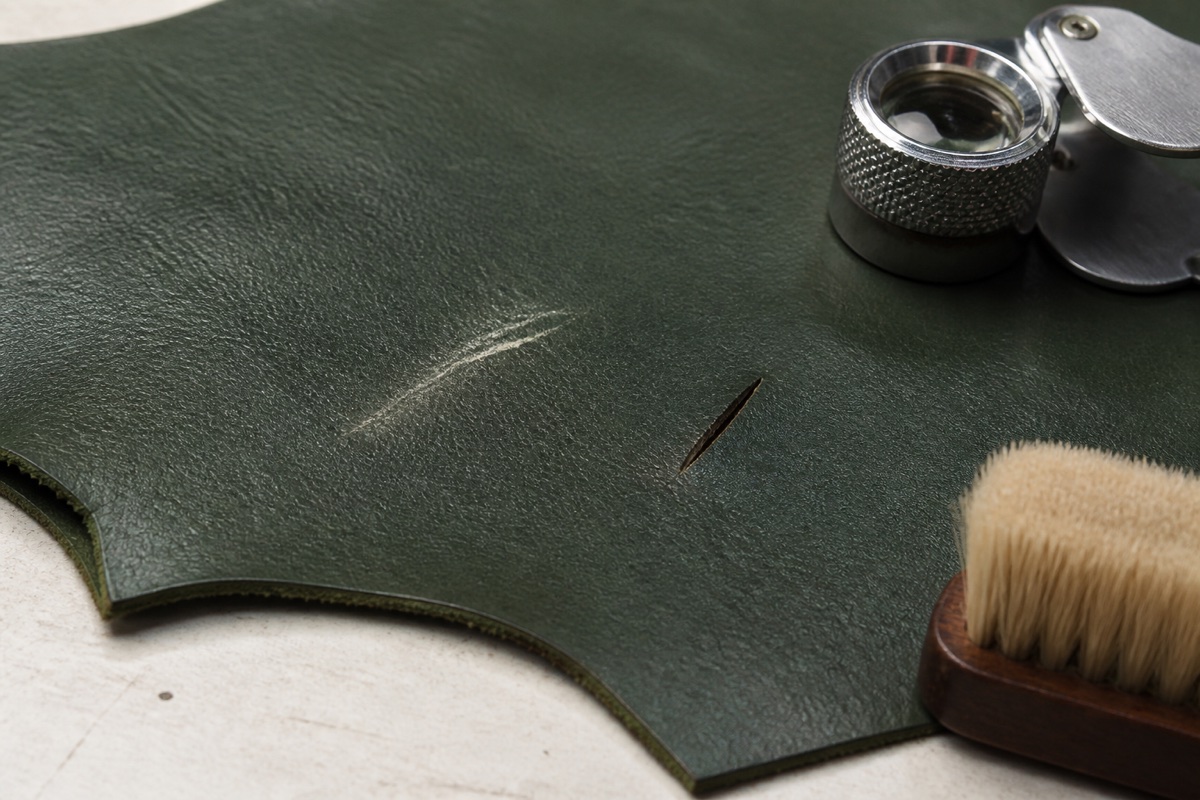
Use light, touch and a close view to map its depth and flexibility. A shallow scuff may need cleaning or color blending; a cut may need a flexible fill or patch.
Do not sand an uncertain surface simply to make the mark disappear. Removing material can reduce future repair options.
The diagnostic atlas connects scratch depth to compatible treatment families and stop conditions.
Read the line as a change in layers
A pale line may be transferred material, compressed grain, a scuffed topcoat, missing pigment or a cut into the leather. Look at the edges under raking light. A surface scuff often has soft irregular borders and may not open during normal flex. A deeper cut can cast a shadow, expose a different layer or separate slightly when the panel moves. Do not use a fingernail or blade to prove depth.
Clean only enough to remove loose compatible soil after the finish is identified. If the line changes without color transfer, it may have been mainly a deposit or gloss difference. If color moves to the cloth, stop. The surrounding finish is part of the problem, and more rubbing can widen a small mark into a refinishing area.
Map location, direction and movement
Record whether the mark sits on a flat decorative panel, a cushion fold, a seat bolster, piping or a seam junction. Follow its direction relative to normal flex. A short cut across a high-tension area can matter more than a longer scuff on a quiet back panel. Include the whole object in one photograph so the load and viewing distance remain visible.
Use the Diagnostic Atlas to separate symptom from treatment. Mark depth as surface, coating, grain, substrate or unknown; record edge shape, transfer and movement; then set confidence. This vocabulary makes a repair brief comparable without pretending a remote image can identify every layer.
Choose cleaning, color work or structural repair
A removable deposit belongs to a compatible cleaning process. Stable color loss in an intact surface may be blended through a professional flexible finish. A shallow groove can need careful leveling within a system. A cut that opens, exposes backing or sits on weakened material requires support or panel work. Sanding every scratch to make it smooth removes material before the correct branch is known.
The patch, filler and adhesive guide explains why support and flex come before cosmetic leveling. Ask what will carry load after the repair, how the edge will transition and how color will move across the area. A thick filler ridge is not a substitute for stable leather.
Set the appearance limit before intervention
Some surface marks can be reduced without disappearing. On aniline or aged leather, aggressive pursuit of uniformity can erase patina or create a larger dark patch. On a pigmented surface, controlled color can integrate a stable scuff, but sheen and printed grain still need matching. Define whether the goal is stabilization, reduced contrast or a broad renewed finish.
Stop home work when the line opens, color transfers, the material feels weak, the substrate is unknown or the proposed product depends on strong preparation. Preserve a close image, whole-panel image and treatment history. A specialist can do more with intact evidence than with a scratch surrounded by several experimental products.
Source note: Editorial method. Accessed August 25, 2026.