Project scope • Furniture & Upholstery
When does a leather project become reupholstery?
Reupholstery begins when the cover, filling, structure or fit needs work beyond a surface treatment.
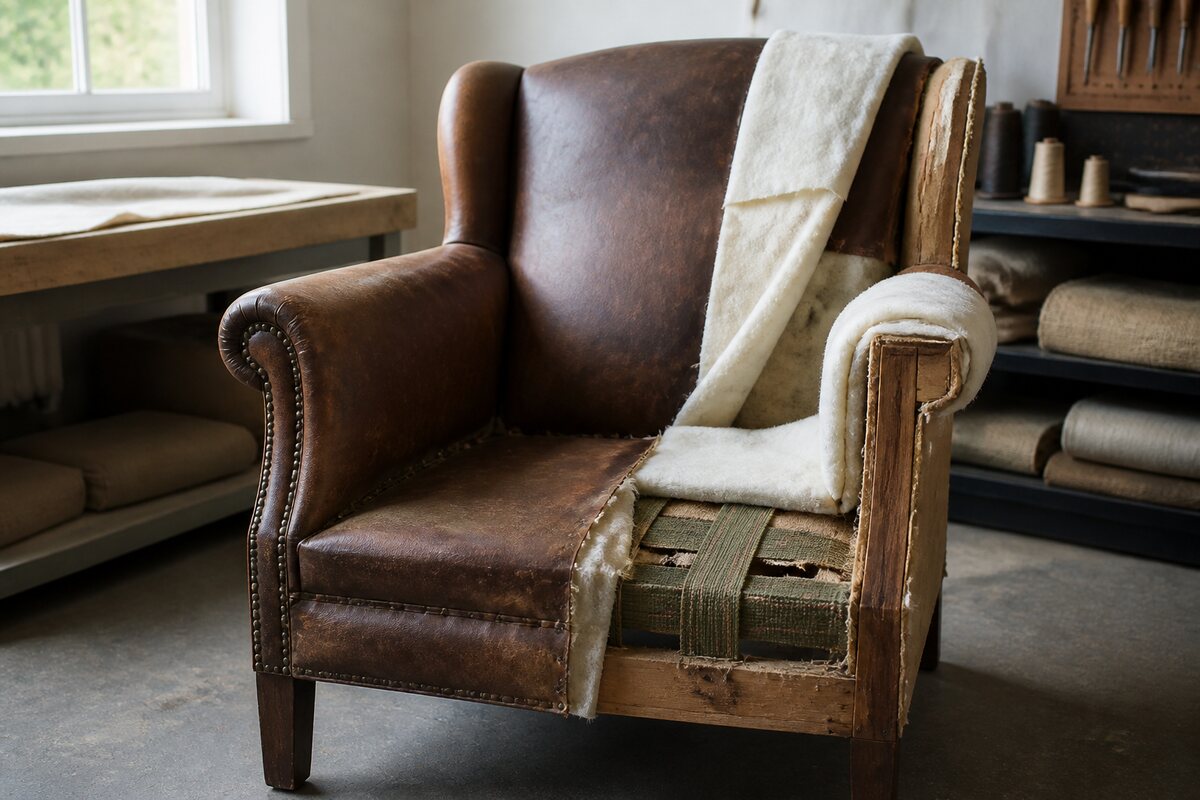
Look at the whole object. A torn seam can be local, but collapsed padding, stretched panels, broken webbing or a damaged frame change the job. Photograph each layer before anything is removed.
Safety and compliance questions also depend on where the furniture is supplied and used. Government guidance treats reupholstery and repair as a distinct sector conversation, so a general internet checklist cannot replace local requirements.
The best brief names the visible problem, the desired result, the use level and the parts that may be opened.
Surface work ends where construction begins
A leather project becomes reupholstery when the cover must be removed or remade to reach the required result. The trigger may be a torn panel, but it can also be compressed filling, broken webbing, loose springs, distorted seams or a frame repair. Recoloring works on a stable surface. Reupholstery changes the assembly that gives the object its shape, support and tension. That boundary matters for cost, scheduling and the skills the job requires.
Inspect the chair or sofa as a system. Sit in several positions and listen for movement. Compare cushion height, front-rail support and the way seams align under load. A sagging seat can pull a sound leather panel until it creases or tears; treating only the visible line leaves the cause untouched. The furniture and upholstery route keeps structure beside surface care for exactly this reason.
Map what can stay and what must open
Create a panel map before removing tacks or staples. Photograph every face, underside, seam junction, fastening line and decorative detail. Mark panels that remain flexible and strong, those that may be reused after cleaning, and those whose edges have weakened. Record piping diameter, stitch spacing and grain direction. These details determine whether a local replacement can integrate with the original object rather than looking like an unrelated patch.
Ask where access is possible. A loose cushion cover can be opened differently from a tight seat stitched into a complex frame. A small tear near the center of a low-stress back may be patchable from behind. The same length of tear beside a loaded seam can require a replacement panel. Visible length is therefore only one field in the repair brief; tension, backing and access are equally important.
Treat compliance as a named question
Rules around filling, covers, labels and fire performance depend on jurisdiction, product type, supply context and date. The UK policy material linked from this page discusses domestic upholstered furniture and gives re-upholstery and repair their own policy theme. It does not answer a commercial hospitality project in another country. Keep the regulator, applicable market and current rule set visible instead of converting one source into a universal checklist.
If the item will be resold, supplied to a client, installed in a public setting or altered across several material layers, obtain current local advice before closing the work. Photograph permanent labels and retain supplier records. The upholstery fire-safety context explains how to frame that conversation without pretending an editorial article can certify the finished item.
Define the desired degree of change
A useful brief distinguishes conservation, sympathetic renewal and full transformation. Conservation may accept creases and color variation while stabilizing weak points. Sympathetic renewal may replace selected panels and match surrounding sheen. Full transformation may change every cover, but then material quantity, seam layout and frame preparation become larger decisions. Each goal can be valid; the failure is leaving the standard unstated until the first new panel is already fitted.
Request separate estimates for structural repair, filling, cover work, finish blending and contingencies discovered after opening. Ask how original material will be stored and identified. If the diagnosis is still uncertain, begin with documentation rather than disassembly. A measured scope preserves options and makes the final result easier to evaluate than a single promise of "complete restoration."
Source note: GOV.UK upholstery guidance. Accessed August 25, 2026.