Finish literacy • Furniture & Upholstery
Which finish changes how a leather sofa should be treated?
A sofa surface can look natural, matte, glossy or printed while behaving very differently under moisture and friction.
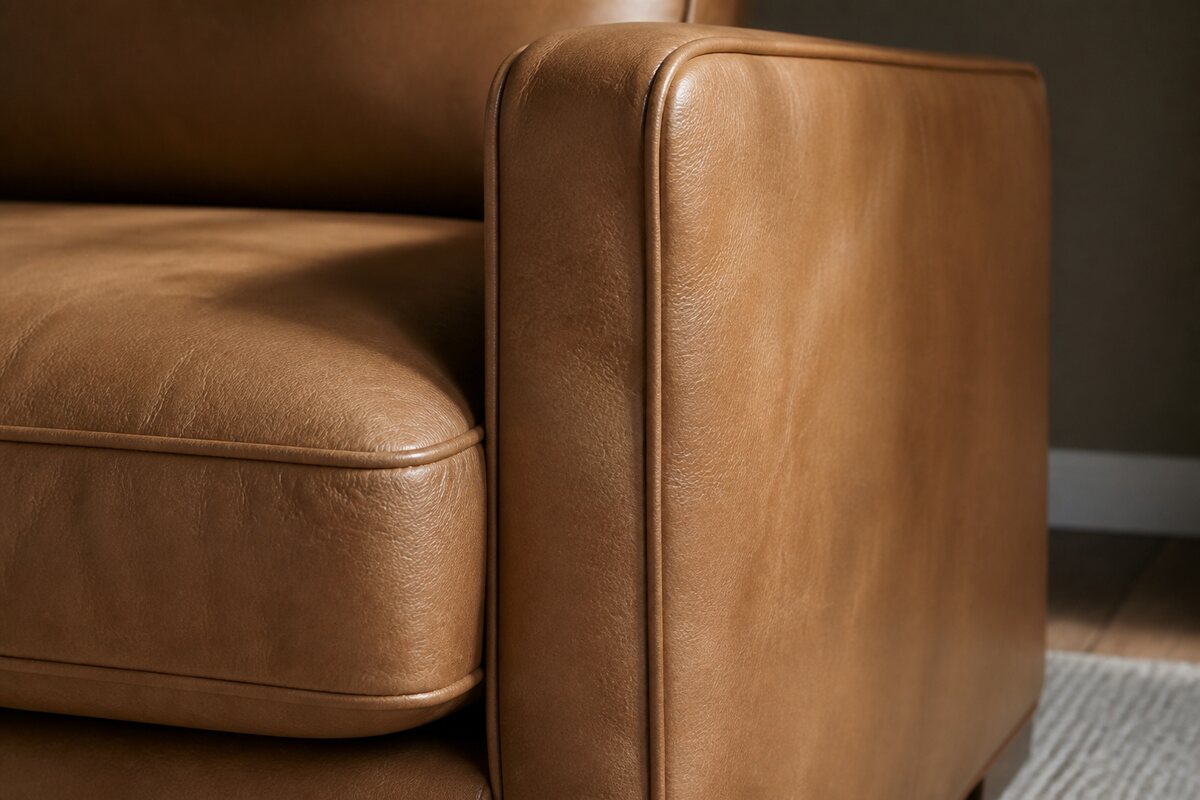
Start with the finish rather than the color. Aniline surfaces expose more of the hide and absorb more readily; pigmented finishes add a protective color layer. Semi-aniline sits between those descriptions.
A careful inspection checks pores, uniformity, transfer, wear at touch points and any earlier coating. If the finish is uncertain, a hidden-area test is evidence gathering, not permission to apply a strong cleaner.
The useful outcome is a treatment path: routine care, controlled recoloring, local repair or a professional inspection.
Read the finish before the color
Color is a poor first test because very different surfaces can share the same brown, black or cream tone. Begin with reflected light. A highly uniform sheen, repeated grain pattern and consistent color through sheltered areas often suggest a substantial surface coating. Natural variation, visible pores and faster darkening around a tiny moisture test can suggest a more open finish, but none of those clues is conclusive alone. Record several clues before assigning a material name.
Compare a touch point with a protected place under a cushion or at the rear of the sofa. Arms and front edges collect skin oils, friction and cleaning residue, so they may look glossier than the original finish. A sheltered area is not a perfect control either: it may be darker because it escaped light. The useful comparison is a pattern of differences, not a single patch that appears more attractive.
Match care to surface protection
Aniline leather carries little opaque surface pigment, which leaves natural grain visible and makes liquid response more important. Pigmented upholstery has a protective color layer that generally tolerates routine use differently. Semi-aniline sits between those broad descriptions. This is why the aniline and pigmented comparison belongs before a product shortlist: the finish controls what can be lifted, darkened or made uneven.
Do not turn the common hidden-area test into a permission slip for a full treatment. A useful test uses little product, stays away from seams and damaged edges, and is judged only after drying. Check color, feel, sheen and transfer to a clean white cloth. If one of those changes, stop. The result has answered a compatibility question even when it tells you not to continue.
Separate soil, coating wear and damage
Dull gray soil may sit on top of an intact coating. Pale abrasion can mean that the color coat is thinning. A network of sharp lines may be cracked finish, while a line that opens during flex can extend into the leather. These conditions can occur together on one sofa. Cleaning addresses removable soil; conditioning changes selected feel properties; refinishing rebuilds appearance and protection; repair deals with missing or separated material. Naming the layer prevents one bottle from being asked to do four jobs.
Use the Leather Problem Diagnostic Atlas to record location, movement, edge shape and finish behavior. A mark on a loose back cushion carries different stress from one on the front rail. A stable color loss can be a refinishing question, while an open seam or exposed substrate belongs in repair planning. The atlas is most useful when the answer remains conditional.
Write a realistic treatment brief
Before contacting a cleaner or restorer, photograph the whole sofa in even daylight, then make close views of repeated wear. Note age if known, daily use, pets, sunlight, recent spills and every product applied. State whether the goal is safer maintenance, a more even color, stabilization of damage or a full visual renewal. The phrase "make it like new" hides several separate decisions about patina, sheen and panel matching.
Pause home treatment when the surface becomes tacky, color transfers, a crack catches a fingernail, a seam opens, or earlier silicone and oil treatments are unknown. Those are not cosmetic failures of the inspection. They are the evidence needed to move from routine leather care to a controlled repair or professional assessment. A restrained diagnosis protects more original material and leaves more future options.
Source note: Leather Naturally. Accessed August 25, 2026.